
Materials
16 September 2026
7 min read
Engineered stone is banned. What can Perth kitchens use now?
Since 1 July 2024 engineered stone can't be made, sold or installed anywhere in Australia. Here is what that means for an existing benchtop, and an honest comparison of the surfaces Perth kitchens are using instead.
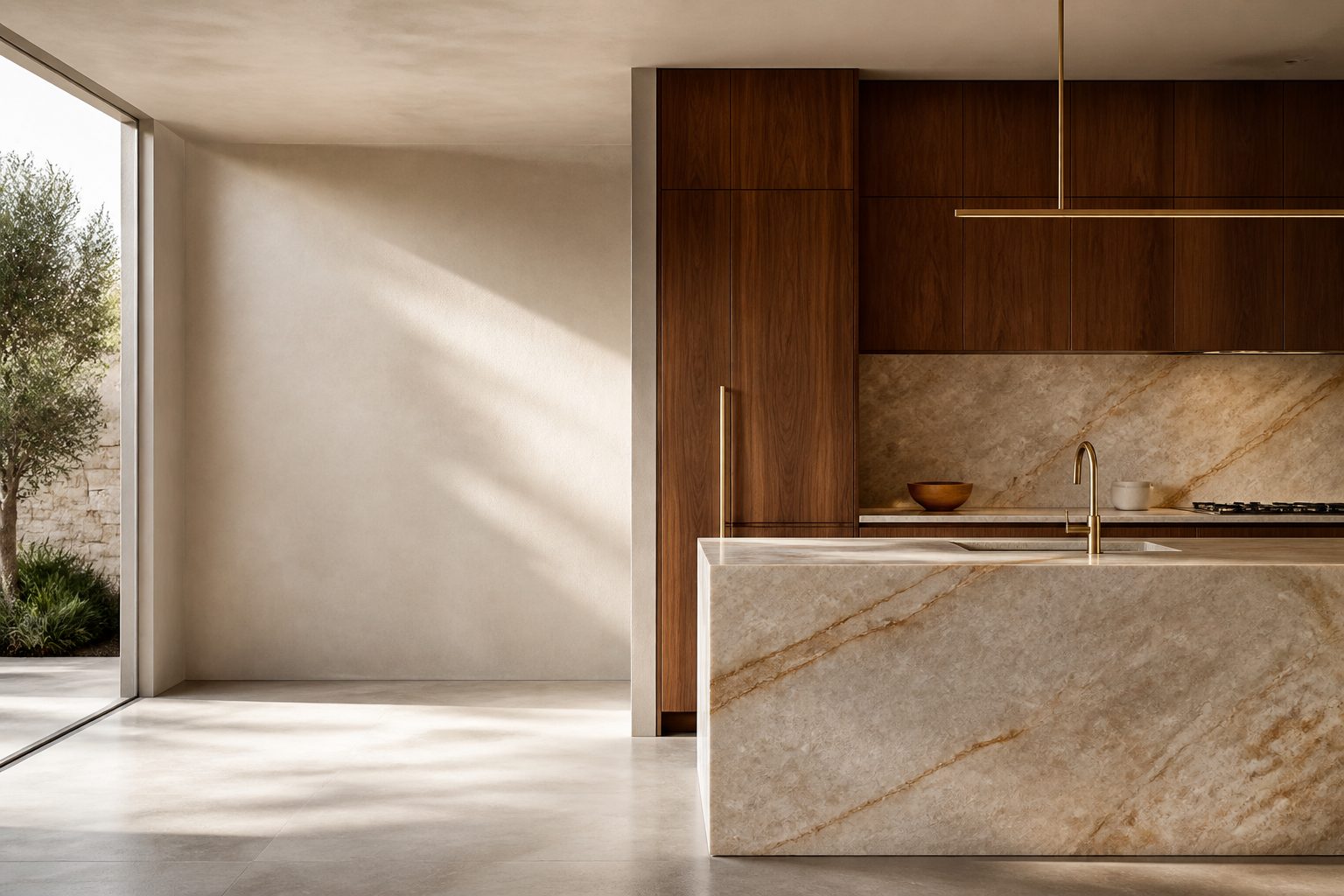
What the ban actually covers
From 1 July 2024, the manufacture, supply, processing and installation of engineered stone benchtops, panels and slabs is prohibited across Australia, including Western Australia. The ban exists because cutting and polishing high-silica engineered stone was causing silicosis in stone workers at rates no other benchtop material produced. From 1 January 2025 importing it is prohibited as well.
The definition matters: under the work health and safety regulations, engineered stone is an artificial product containing crystalline silica, created by combining natural stone with resins and pigments, that is mechanically processed. That is why a new generation of low-silica surfaces has appeared — more on those below.
Do I have to remove my existing engineered stone benchtop?
No. The ban applies to new work, not to benchtops already installed. An engineered stone benchtop in your kitchen poses no risk to you in normal use — the hazard is the fine dust created when it is cut, ground or polished.
What changed is what can be done to it. Removing, repairing or modifying a legacy engineered stone benchtop (cutting a new tap hole, for instance) is only permitted under strict silica controls — wet cutting, extraction, respiratory protection and, in most cases, notification to the safety regulator. For a kitchen facelift that keeps the existing benchtop, that is rarely an issue. If you want a new cooktop cut-out in an old engineered stone bench, expect the fabricator to price the controls in, or to recommend replacing the top.
The alternatives, honestly compared
Porcelain and sintered stone
Large-format porcelain slabs and sintered surfaces (Dekton, Neolith, Lapitec and similar) have become the default replacement in Perth for the look engineered stone used to give: consistent pattern, marble-look veins, tight joints. They are extremely hard, heat-proof enough to take a hot pan, UV-stable so they can run out to an alfresco, and non-porous. Two cautions: they are brittle at thin edges and cut-outs until installed, so choose a fabricator who works with them regularly; and deep chips are hard to repair invisibly. Cost sits at the upper end.
Natural stone: granite, quartzite and marble
Granite is the workhorse — hard, heat-tolerant, available honed or polished, and every slab is unique. Quartzite is harder still with a marble-like look. Marble is beautiful and soft; it will etch under lemon juice and wine, which some people love as patina and others hate. All natural stone needs sealing every year or two. Natural stone contains silica too, but at levels that normal fabrication controls have always managed.
Silica-free mineral and low-silica surfaces
The manufacturers who made engineered stone have moved to surfaces with little or no crystalline silica, which places them outside the ban's definition. Caesarstone Mineral — the range we supply — is marketed as crystalline-silica-free, and Caesarstone also makes porcelain slabs. These surfaces look and fabricate much like the old product and carry the manufacturer's warranty; ask for the safety data sheet and confirm your fabricator is approved to process it.
Solid surface (acrylic)
Corian and similar acrylic surfaces are seamless, warm to the touch, and — uniquely — fully repairable: scratches and burns can be sanded out. Integrated sinks with no join are possible. They are softer than stone, so hot pans and knives need a board. Mid-to-upper price range.
Laminate
Modern laminate benchtops from Laminex and Polytec are a long way from the 1980s. Thin square edges, convincing stone and timber patterns, and a price that leaves budget for the cabinetry. They dislike standing water at joins and direct heat, and a deep cut is permanent. For laundries, secondary kitchens and rental properties they are often the right answer.
Timber, stainless steel and concrete
Solid timber brings warmth and needs oiling and respect around the sink. Stainless is hygienic and heat-proof and shows every scratch until it develops a uniform patina. Concrete is heavy, custom and characterful, and must be sealed well. Each suits a particular kitchen and owner rather than being a general-purpose choice.
How to choose for a Perth kitchen
- North- or west-facing benches in direct sun: porcelain, sintered stone or granite. Some resins and laminates yellow or fade.
- Alfresco kitchens: porcelain, sintered stone, granite or stainless only — nothing with resin, nothing laminated.
- Heavy cooking households: porcelain, sintered or granite for heat; solid surface if repairability matters more.
- Tight budget, big kitchen: laminate on the perimeter, a better material on the island where hands and eyes land.
- Selling or renting: laminate or a Caesarstone Mineral surface gives the cleanest look for the spend.
Benchtops are templated after the cabinets are installed, which adds ten to twelve days to a kitchen program for stone and porcelain, so the decision needs to be made when the cabinetry is ordered. Our complete benchtop guide goes deeper into fabrication, edges and care for every material above.
Common questions
Is engineered stone banned in Western Australia?
Yes. The ban on manufacturing, supplying, processing and installing engineered stone benchtops, panels and slabs applies nationally, including WA, from 1 July 2024, with imports prohibited from 1 January 2025.
Can I keep my existing engineered stone benchtop?
Yes. The ban applies to new work. An installed benchtop is safe in normal use; only cutting, grinding or polishing it creates hazardous dust, and that work now requires strict controls.
What is the closest look to engineered stone now?
Caesarstone Mineral (crystalline-silica-free), large-format porcelain and sintered stone give the most similar consistent, marble-look result. Porcelain and sintered stone are harder and UV-stable; mineral surfaces fabricate more like the old material.
Which benchtop is best for a Perth alfresco?
Porcelain, sintered stone, granite or stainless steel. Resin-based and laminated products are not designed for UV and weather.
Related
Sources & further reading
Information checked 16 September 2026. Product, safety and regulatory requirements can change; confirm current details for your project.